GPU Compute Futures
As artificial intelligence has experienced explosive growth in recent years, global demand for high-performance computing has risen at an unprecedented pace. In the digital economy, computing power is increasingly viewed as the "new oil" of the 21st century, with its role extending far beyond that of a technology service. Much like traditional commodities such as crude oil, gold, and agricultural products, computing power is gradually becoming standardized and scalable, creating the conditions for it to evolve into a tradable and financialized asset. This has paved the way for the emergence of GPU compute futures, a new type of financial derivative.
What Are GPU Compute Futures?
Simply put, GPU compute futures transform GPU computing capacity into a standardized tradable commodity. This allows buyers and sellers of computing resources to agree today on the rental price of GPU compute for delivery at a specified future date.
Instead of waiting until they actually need computing resources and facing potentially higher spot market prices, companies can lock in future computing costs or rental income in advance—similar to how businesses use oil or agricultural futures contracts. GPU futures therefore provide computing power with key commodity market functions, including price discovery, trading, and risk management.
In financial markets, futures contracts are often used alongside other derivatives for risk management and hedging. For example, airlines may purchase crude oil futures to lock in future jet fuel costs, reducing the impact of sharp increases in oil prices on operating expenses and profitability.
For people who are not familiar with futures, you can also check out the following article.
A Basic Introduction to Futures
How Do GPU Compute Futures Work?
Unlike commodity futures based on physical assets such as gold or soybeans, GPU compute futures generally do not involve the physical delivery of GPUs or graphics cards. Instead, contracts are typically settled against a standardized GPU compute rental price index.
For example, a futures contract could be linked to the hourly rental rate of servers equipped with NVIDIA H100 GPUs, allowing market participants to hedge future computing costs or rental income.
| Core Feature | GPU Compute Futures | Soybean Futures | Equity Index Futures |
|---|---|---|---|
| Underlying Asset | Standardized GPU compute rental rates (quoted in USD per hour). | Physical soybeans. | A stock market index (e.g., the S&P 500 Index). |
| Pricing Index | Compiled by specialized data providers (such as Silicon Data), using transaction data collected from major global cloud providers to create a daily compute price index. | Based on spot market prices and public trading data from major global agricultural exchanges. | Calculated by stock exchanges or index providers using the weighted prices of constituent stocks in real time. |
| Settlement Method | Cash settlement. At expiration, gains or losses are settled based on the difference between the contract price and the published compute price index—without delivering physical servers. | Cash settlement or physical delivery. Physical delivery requires transferring warehouse receipts and payment for the underlying commodity through exchange-approved warehouses. | Cash settlement. Gains or losses are settled based on the difference between the contract price and the final settlement index. |
Why Does the Market Need GPU Compute Futures?
Today's GPU compute spot market remains highly fragmented and lacks transparency. GPU rental prices are often negotiated privately between buyers and sellers, while long-term contracts typically offer limited flexibility for early termination.
Moreover, differences in GPU models—such as the H100, B200, and RTX 5090—as well as data center location, network connectivity, service quality, and contract duration all influence actual rental prices. These factors make it difficult to establish a broadly accepted benchmark for pricing. Information asymmetry and inefficient price discovery expose companies across the AI ecosystem to significant pricing risks.
Because the compute rental market is highly decentralized, rental rates can fluctuate sharply in response to changes in chip supply, geopolitical developments, or the launch of next-generation GPU architectures. This creates major financial management challenges for both suppliers and consumers of computing resources.
For data center operators, stable and predictable rental income is essential for supporting large capital expenditures and project financing. For AI developers, controlling compute costs is critical to preventing R&D expenses from escalating and reducing available capital. By establishing transparent and credible benchmark pricing and offering futures contracts as a hedging tool, both sides of the market can lock in future prices, reduce revenue and cost volatility, and improve cash flow predictability and operational stability.
Key Market Participants and the Hedging Value of GPU Compute Futures
The most direct demand for GPU compute futures comes from companies across the compute value chain. Both suppliers and consumers can use futures contracts to hedge against price volatility and improve long-term financial planning and cost management.
However, the long-term success of the market will also depend on participation from financial institutions and professional investors, which are essential for providing liquidity and improving market efficiency.
AI Model Developers (Buy-Side Value)
For AI developers such as OpenAI and Anthropic, fluctuations in computing costs represent one of the biggest risks to profitability. Many companies must quote prices and sign long-term customer contracts before their actual computing costs are incurred. This timing mismatch leaves them exposed to rising spot market prices for GPU compute.
GPU compute futures can significantly reduce this uncertainty. Suppose an AI software company expects to require 2 million H100 GPU hours over the next six months. It could establish a corresponding long futures position today. If GPU rental prices rise due to supply shortages, profits from the futures position can offset the higher spot market costs. Conversely, if rental prices fall and the futures position incurs losses, the company can purchase compute capacity more cheaply in the spot market, resulting in a relatively stable overall cost.
Data Center Operators and Emerging GPU Cloud Platforms (Sell-Side Value)
While AI developers are primarily concerned about rising compute costs, data center operators and GPU cloud providers face the opposite risk: declining rental rates and weaker-than-expected revenue.
Building large-scale GPU clusters requires significant upfront capital investment. Operators typically rely on projected utilization rates and rental prices when securing project financing from banks or private lenders. If GPU rental prices fall because of oversupply or the launch of next-generation architectures such as NVIDIA Blackwell, revenue and profitability may decline substantially, potentially weakening debt repayment capacity and increasing default risk.
By hedging through the futures market, compute providers can reduce the financial impact of falling rental rates. For example, if a cloud provider expects to lease a large amount of H100 compute over the coming year, it could establish a corresponding short futures position. If spot rental prices decline, gains from the short futures position can offset lower rental income, helping maintain stable cash flow for operations and debt servicing. Conversely, if strong demand pushes rental prices higher, losses on the hedge would likely be offset by increased revenue from the spot rental market.
Financial Institutions: Providing Liquidity and Improving Price Discovery
Beyond commercial hedgers, hedge funds, financial institutions, and professional investors will play a critical role in building a deep and liquid GPU compute futures market.
As computing power becomes increasingly standardized, investors are beginning to view it as a new macro commodity that could eventually sit alongside crude oil, natural gas, and precious metals within diversified portfolios.
Institutional participation would not only improve market liquidity but also enhance price discovery in what has historically been an opaque market. Financial institutions can leverage research on semiconductor supply chains, electricity costs, GPU supply and demand, and AI industry trends to forecast compute prices and execute directional or relative-value trading strategies.
For example, if a hedge fund expects severe shortages of NVIDIA B200 GPUs over the next quarter, it could establish long positions in B200 compute futures. If hardware shortages subsequently drive rental prices higher, the fund could close its futures positions and profit from the increase.
Upcoming GPU Compute Futures Products
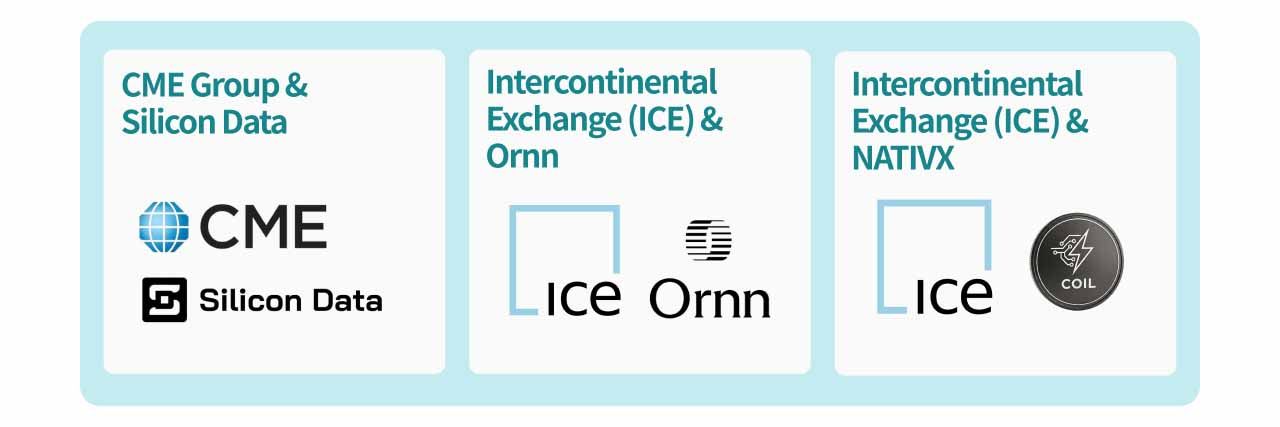
!Illustration of Exchanges Planning to Launch GPU Compute Futures .
Although no GPU compute futures contracts are currently listed for trading, several exchanges and data providers are actively developing benchmark pricing indices and planning related derivatives. The following initiatives are among the most advanced.
1. CME Group & Silicon Data
On May 12, CME Group, the world's leading derivatives exchange, announced a partnership with Silicon Data to launch what is expected to become the world's first GPU compute futures contract.
CME's entry marks an important milestone in the standardization and financialization of computing power, positioning GPU compute as an emerging commodity attracting growing interest from Wall Street during the AI era.
The contracts will be priced using Silicon Data's benchmark GPU compute rental indices, covering major NVIDIA chips including the H100 and A100.
Silicon Data already publishes daily rental pricing for GPUs including the A100, H100, and B200 through major financial information platforms such as the London Stock Exchange Group (LSEG) and Bloomberg, providing traders, financial institutions, and AI companies with important reference benchmarks for monitoring computing costs.
2. Intercontinental Exchange (ICE) & Ornn
In addition to CME, the Intercontinental Exchange (ICE) has announced a partnership with Ornn to develop GPU compute futures based on Ornn's Open Compute Price Index (OCPI).
The planned contracts will cover not only the widely used H100, but also newer models including the H200, B200, and the RTX series.
OCPI's primary advantage lies in addressing the gap between publicly quoted rental prices and actual transaction prices. Rather than relying solely on advertised rates, the index is built from completed and settled transactions. It also standardizes pricing across variables such as hardware performance, geographic location, and contract duration, making transactions more comparable across enterprises of different sizes.
OCPI is already available through Bloomberg Terminal and published in real time by Ornn Data, helping improve transparency, data quality, and the credibility of benchmark pricing in the GPU compute rental market.
3. Intercontinental Exchange (ICE) & NATIVX
Alongside its collaboration with Ornn, ICE is also working with NATIVX to develop GPU compute futures based on the COIL Index.
The defining feature of the COIL Index is its use of an energy-based standardization methodology, converting GPU compute pricing and network connectivity costs into a common energy-equivalent unit. This approach reduces pricing distortions caused by regional differences in electricity costs and infrastructure, creating a more globally comparable benchmark.
ICE plans to list these contracts alongside its existing electricity and natural gas futures, allowing market participants to manage price risks across computing power, energy, and infrastructure costs within a unified hedging framework.
Conclusion
The emergence of GPU compute futures reflects the transformation of computing power from a technology service into a standardized, tradable, and hedgeable financial asset.
As AI model training continues to expand, fluctuations in compute pricing have become an increasingly important risk for AI developers, data center operators, and financial institutions alike. By establishing transparent pricing benchmarks, improving price discovery, and providing effective hedging tools, GPU compute futures have the potential to address the fragmentation and information asymmetry that currently characterize the compute market.
Although these products have yet to begin trading, initiatives led by CME Group, ICE, and several leading data providers suggest that the financialization of computing power is moving from concept to reality. Over time, GPU compute futures could become an essential risk management tool for AI infrastructure markets and ultimately evolve into a new asset class within the global commodities landscape.